Art as devotion
For the Savara, art is not decoration. Their homes are sanctuaries; the walls are offerings. An Ikon is painted to appease gods and spirits, to ask for protection, to avert illness, to plead for a bountiful harvest. Nothing is painted to be looked at. Everything is painted to be answered.
It is why the work has the quality it has. A painting made as a request rather than a product carries a seriousness that decoration never manages — and it explains why the motifs have not drifted in the way commercial folk art usually drifts.
A language of shapes
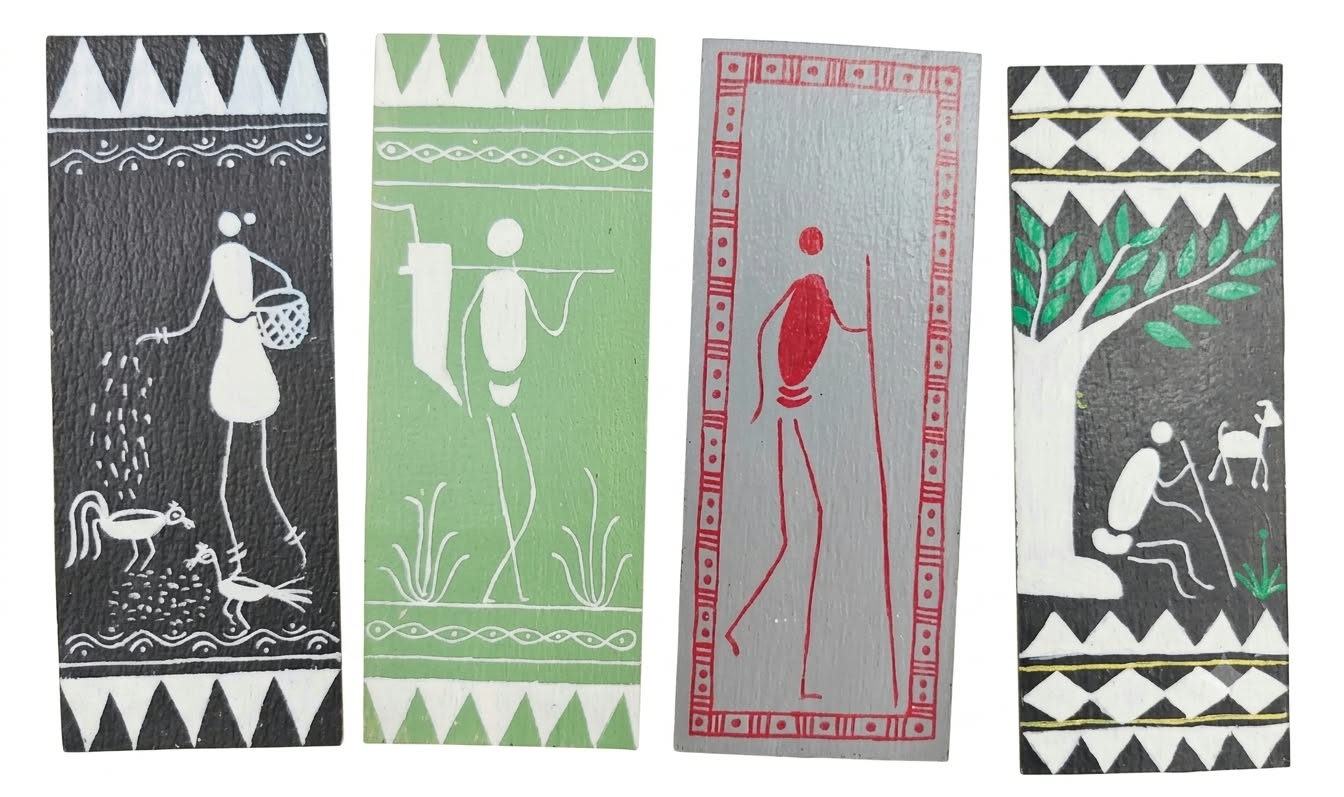
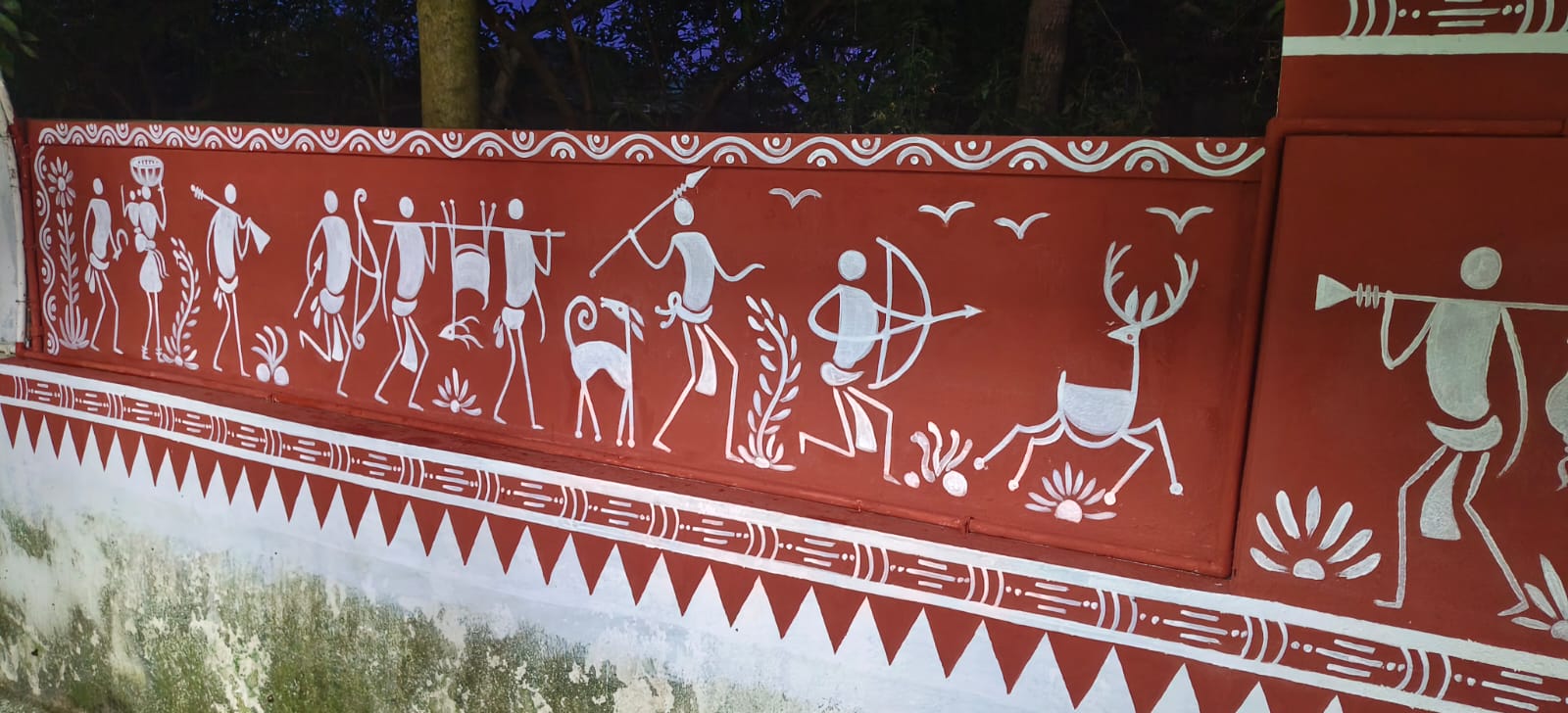
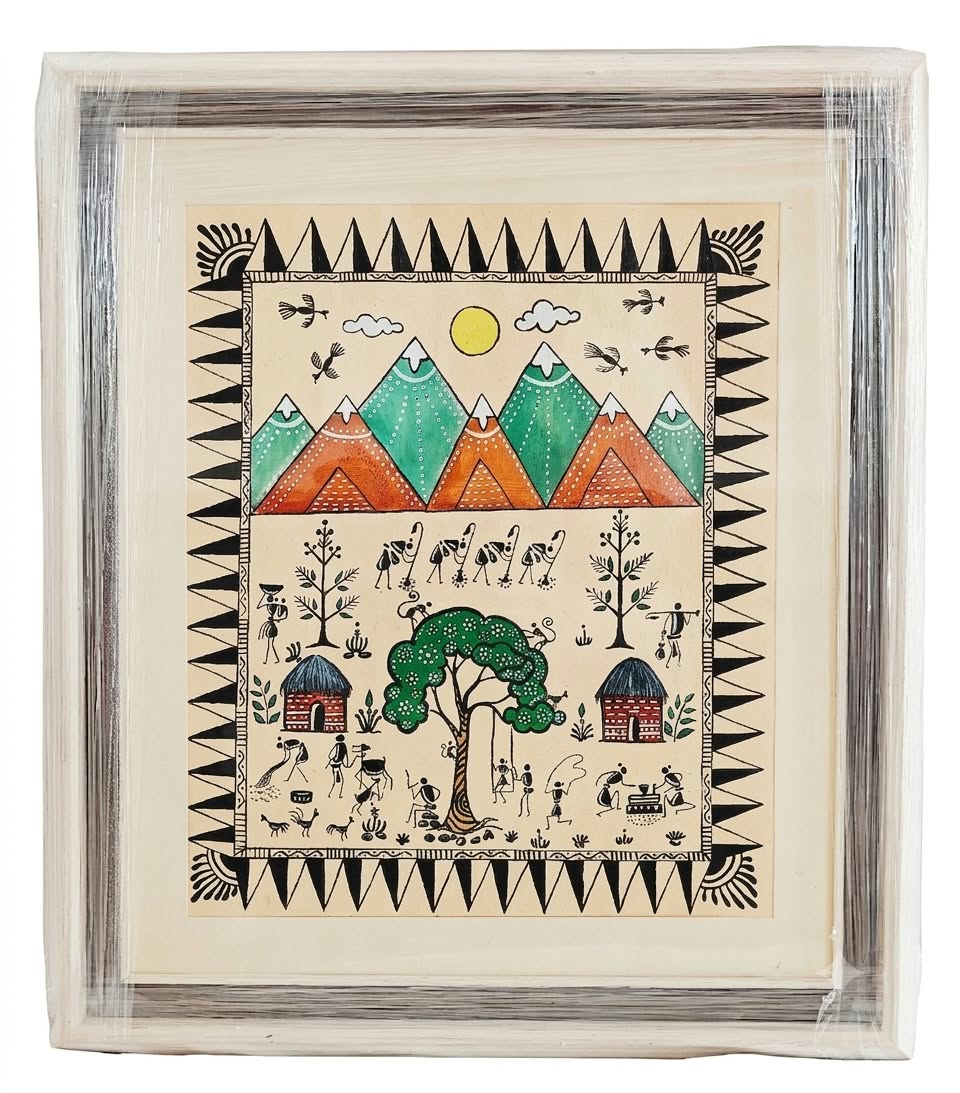
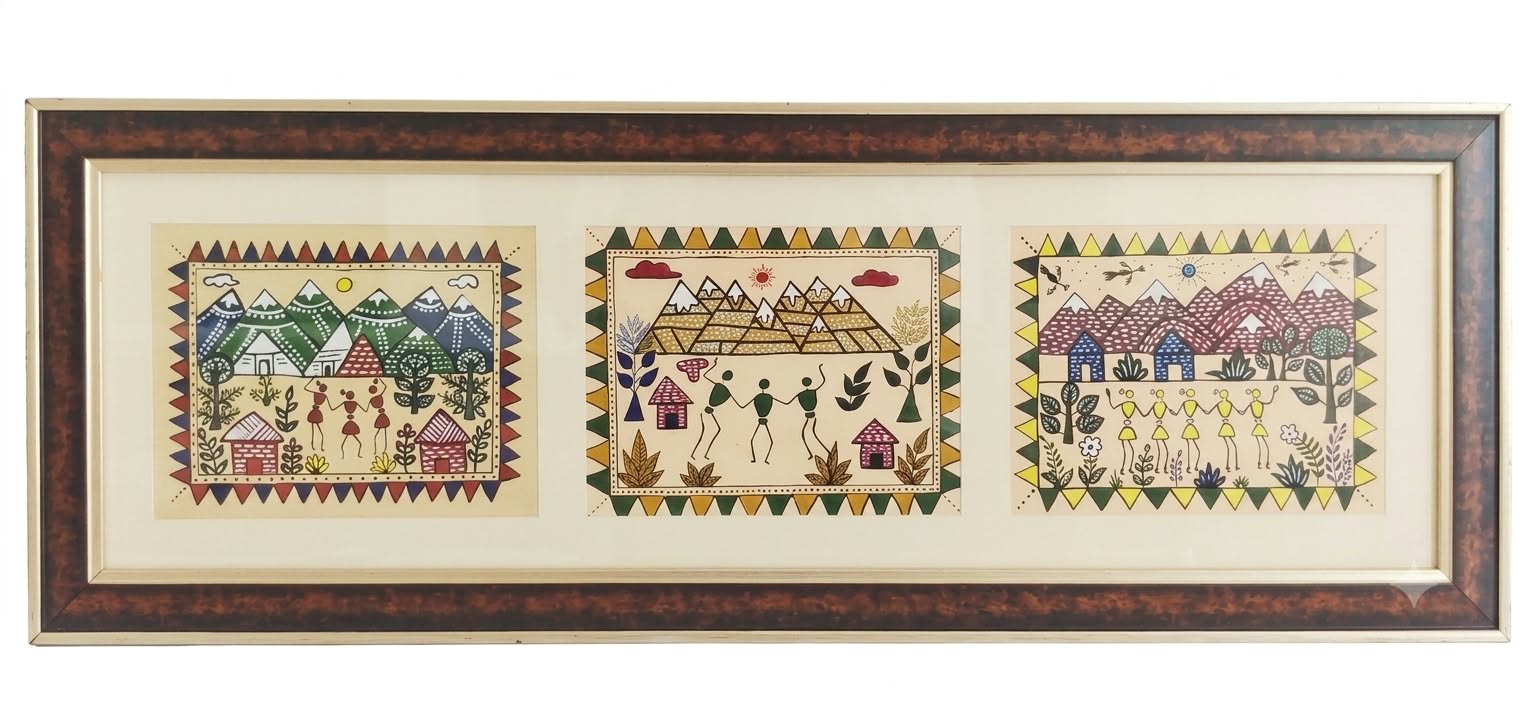
Every Ikon begins with the idea of a house — a square, a circle, a rectangle — and gathers the figures of daily life, ritual and the spirit world inside it. The geometry is not ornament; it is grammar. Triangles are mountains. Circles are the sun and the cycles of life. Squares and diamonds are the earth and the sky.
The animals carry meaning too. The elephant stands for strength and wisdom. The snake is fertility, regeneration, protection. Read the border before you read the picture.
The art is a visual theology, illustrating the interconnectedness of human society with all life and nature.
Savara Renaissance, Office of the DC (Handicrafts)
The earth palette
White is rice flour. Black is charcoal. Red is ochre, yellow is ground turmeric. The powders are bound with rice paste or tamarind seed extract, then laid on with brushes made from reeds and grass — and, very often, with the artisan's own fingers, which is where the texture comes from.
The wall is prepared first, smoothed with a mixture of mud and cow dung. A painting is therefore a relationship with a building: when the building changes, the painting has nowhere to live.
The canvas that disappeared
That is precisely what happened. Over several decades mud homes gave way to concrete, and with them went the surface the art was made for. A dwindling population and the absence of any economic incentive did the rest: the younger generation was leaving the craft behind.
This is the part worth sitting with. Edisinge was never lost through indifference to beauty. It was lost because the wall it was painted on stopped being built, and because a young person could not make a living from it. Craft dies of economics far more often than of taste.
What brought it back
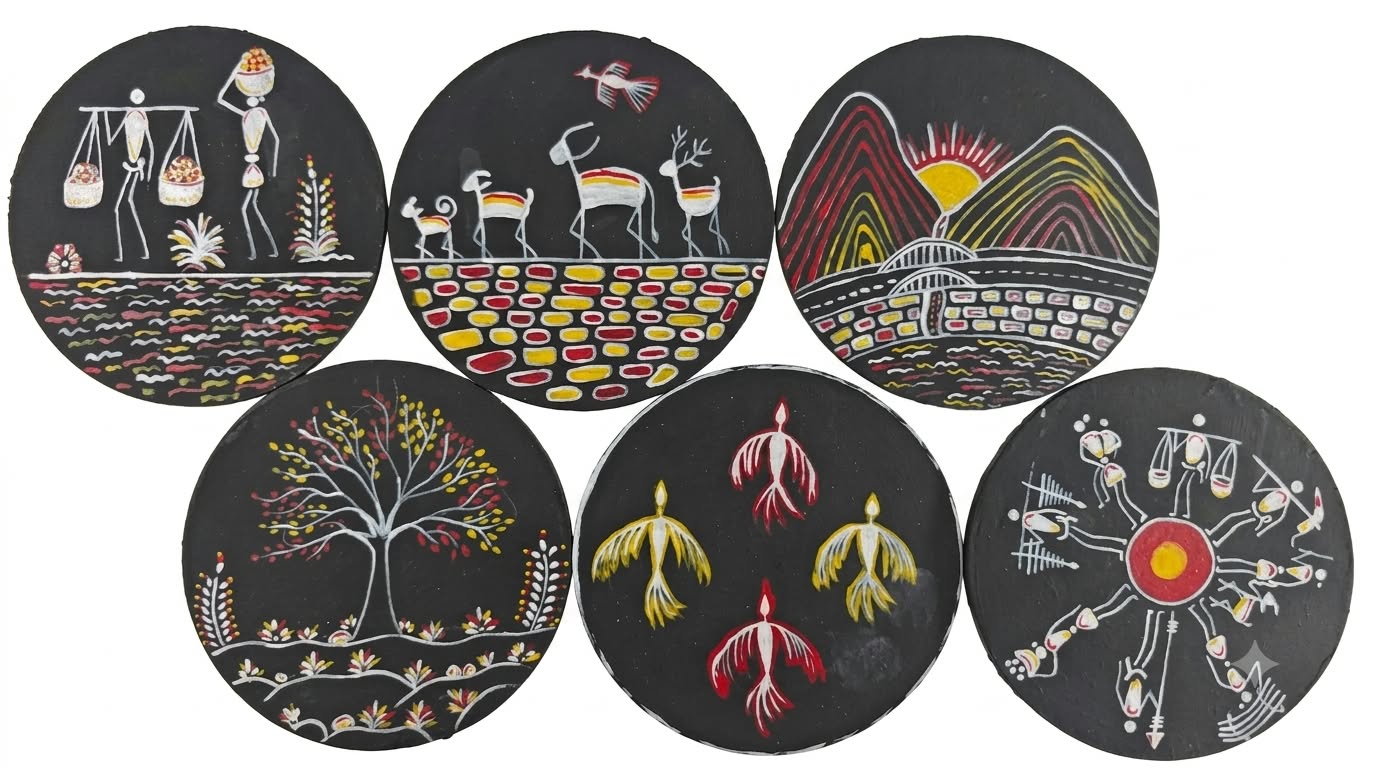
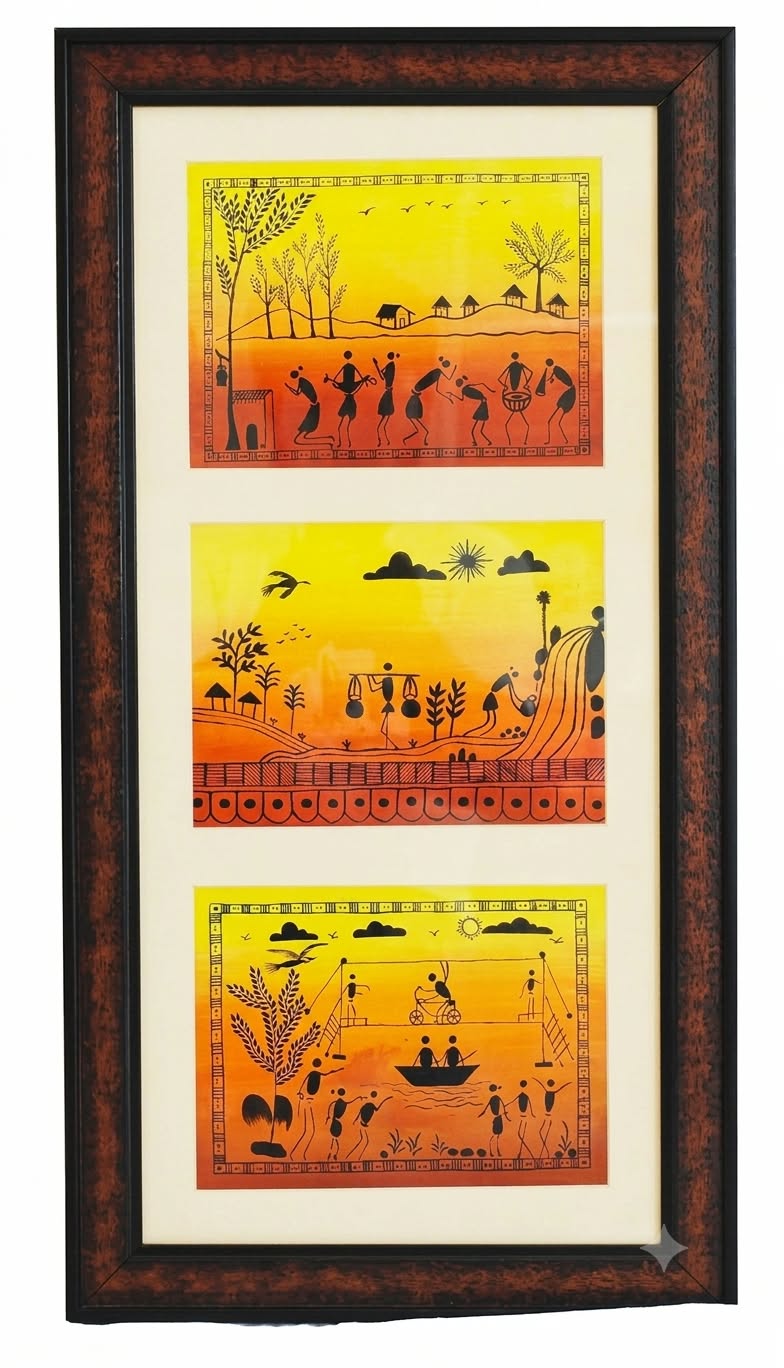
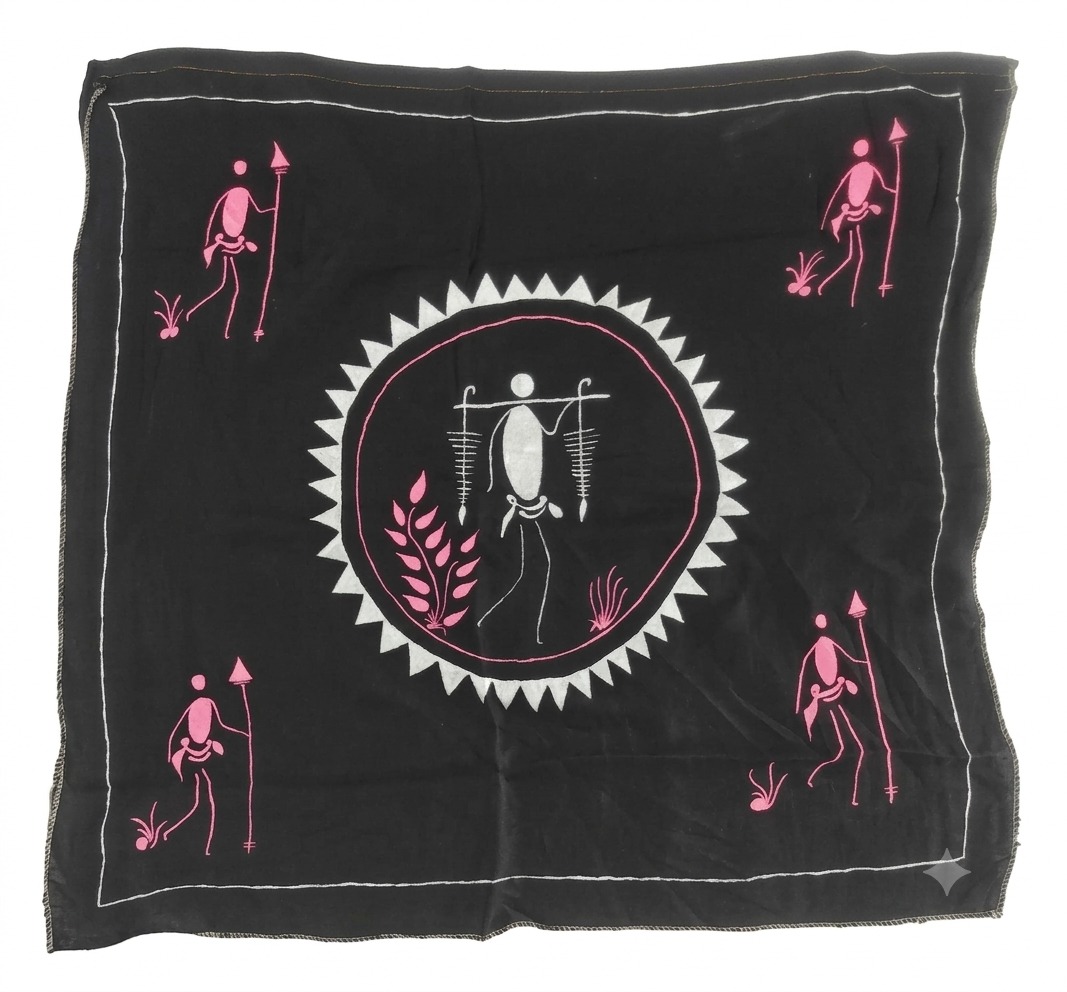
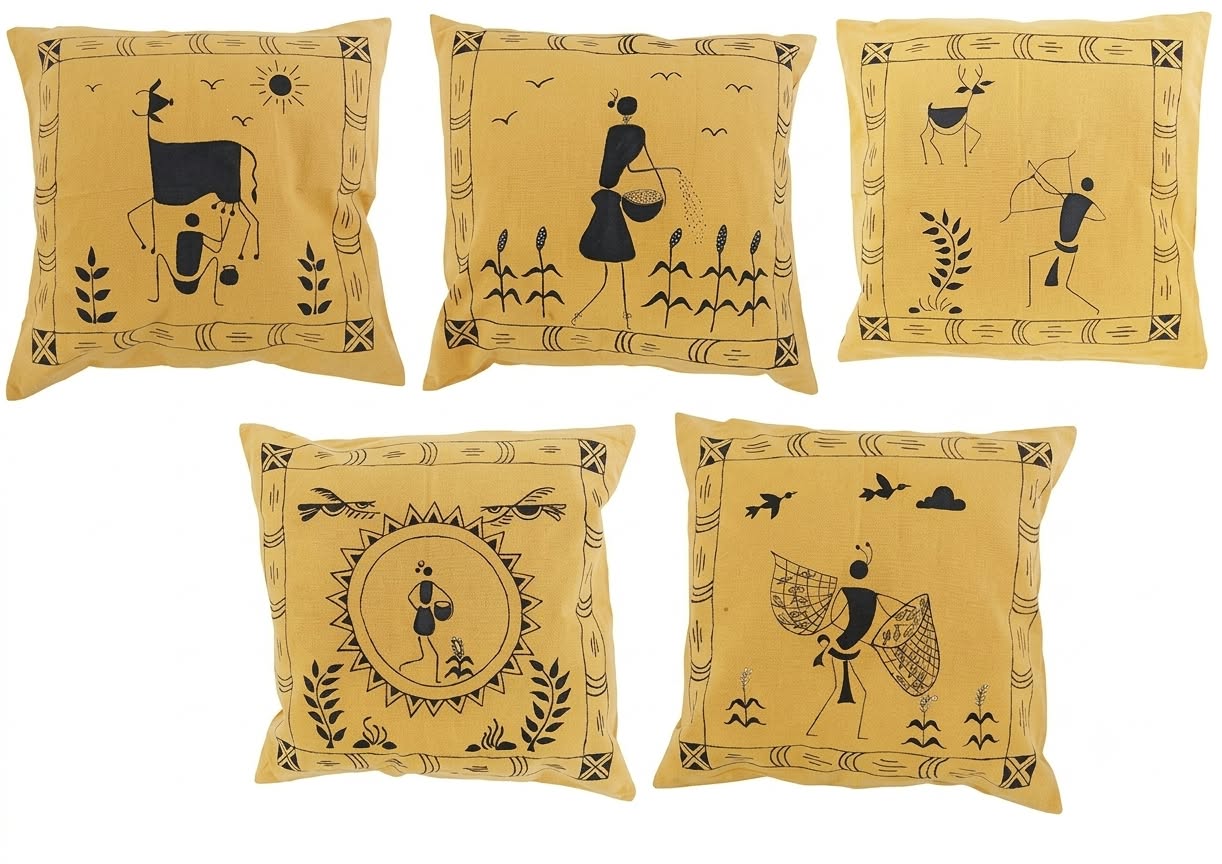
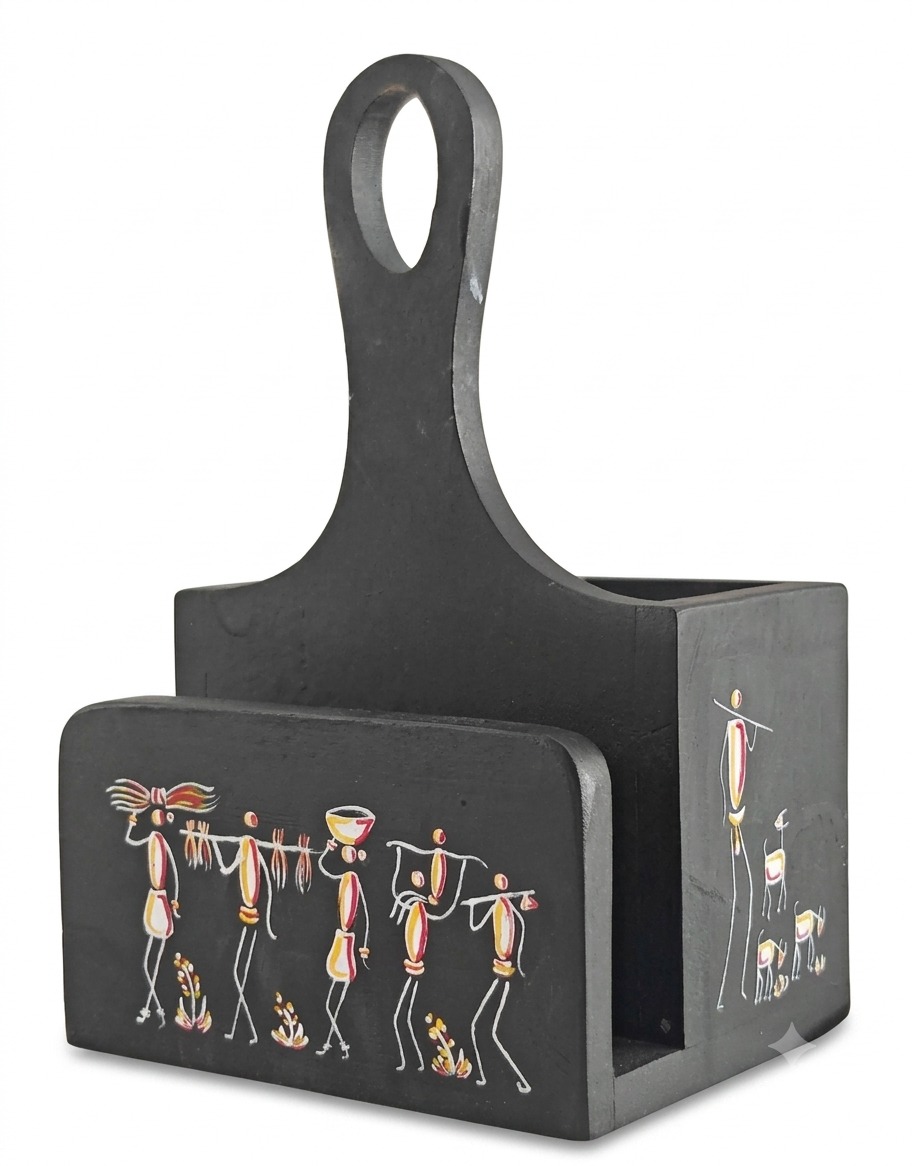
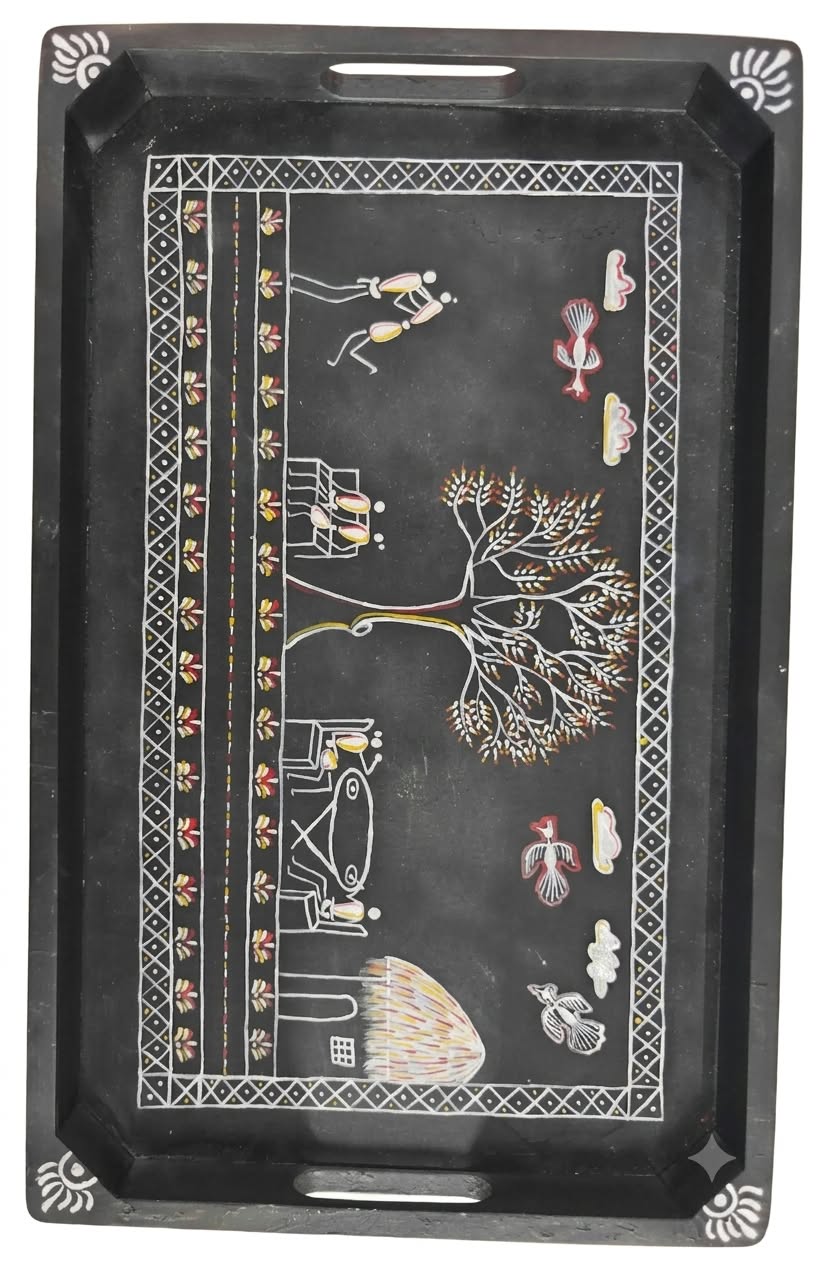
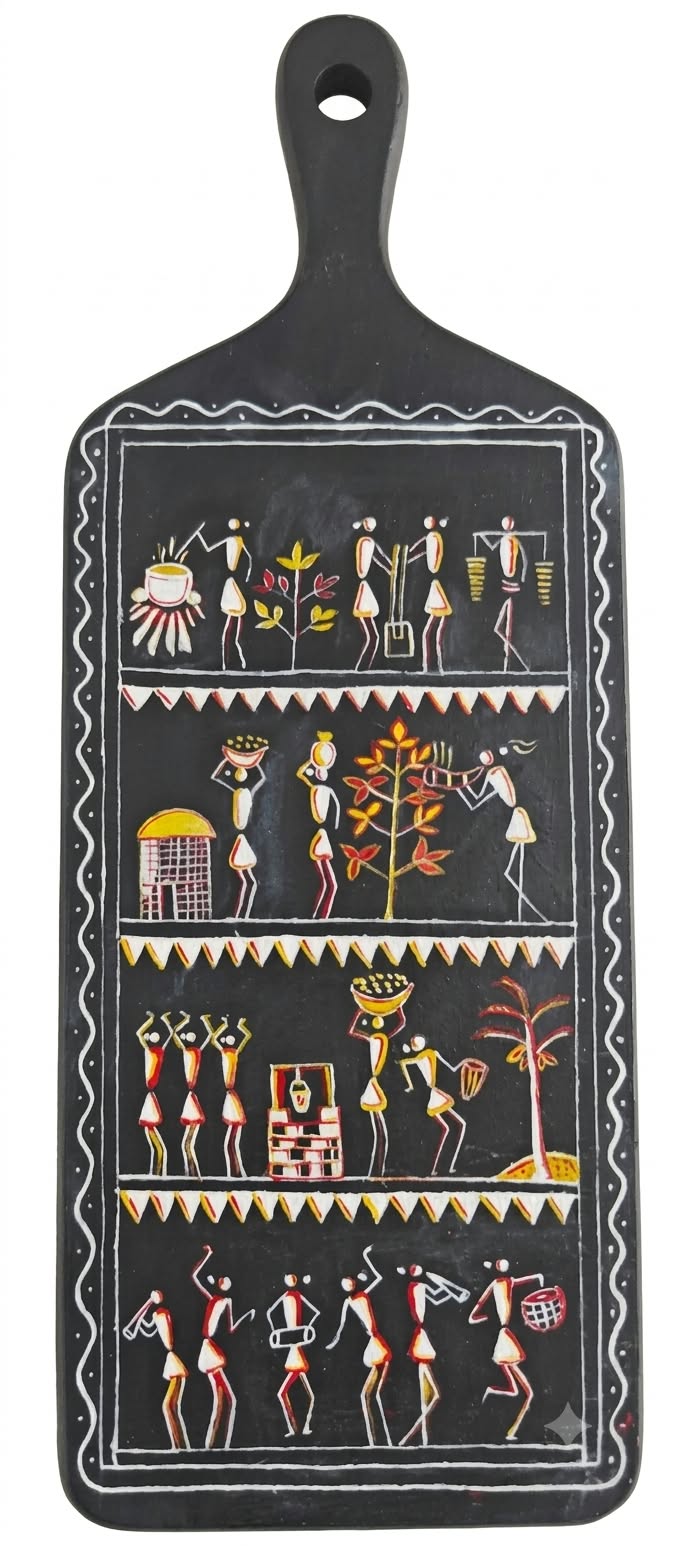
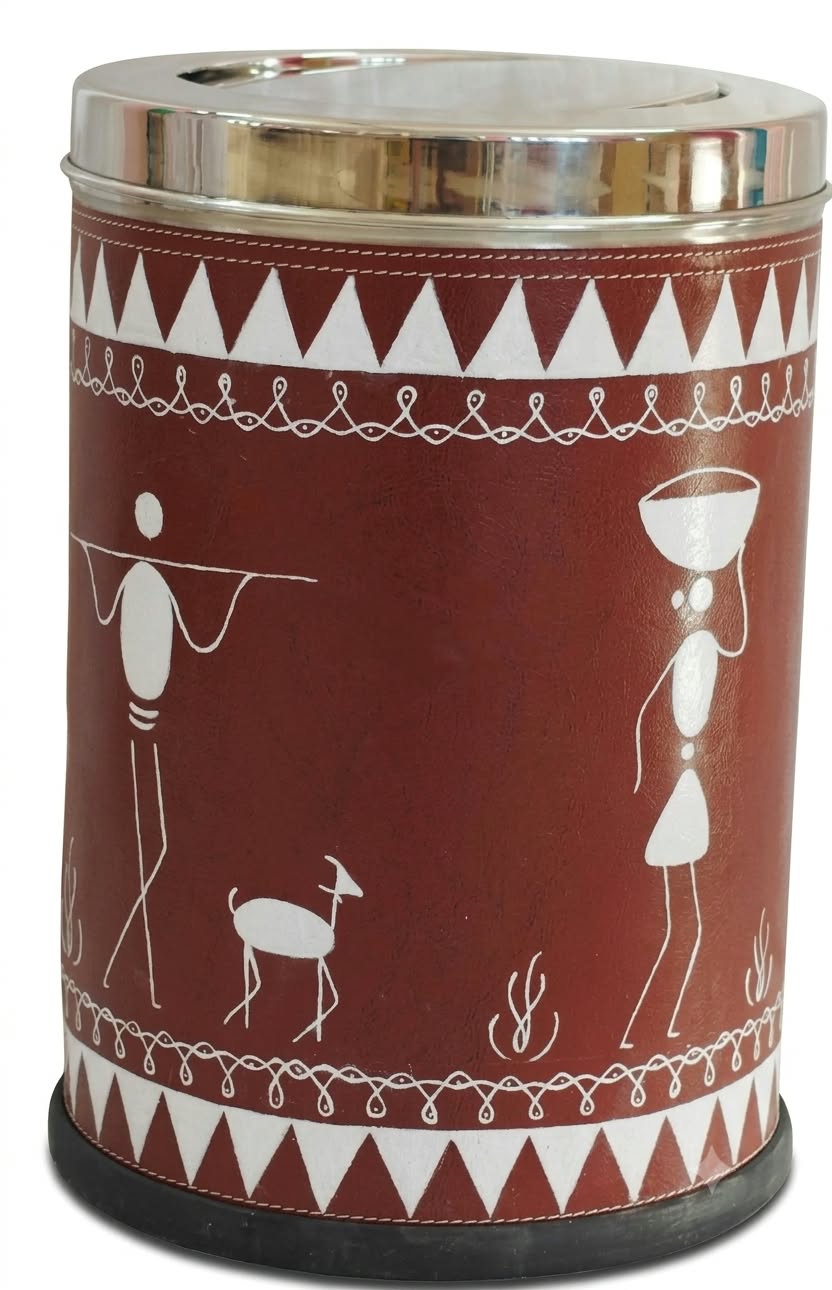
A revival led by the Office of the Development Commissioner (Handicrafts), with training delivered through APITCO, set out to give the art a surface that survives: fabric, rexine, ceramic, bamboo, glass, stone and MDF board. The style was held; the substrate changed.
The Design Intervention Program came first — market research across India to find what would actually sell, then design sketches that matched the traditional hand to contemporary demand, then a structured curriculum for the artisans themselves.
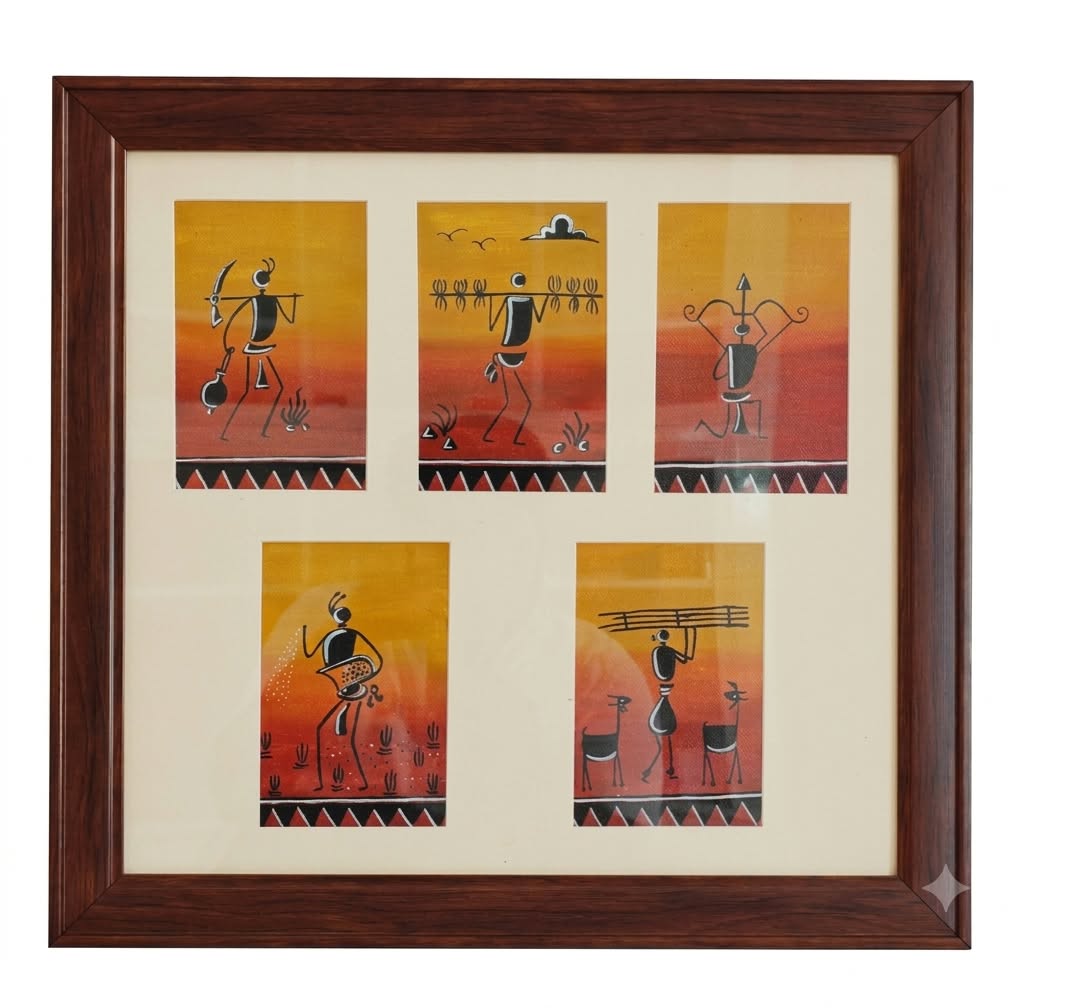
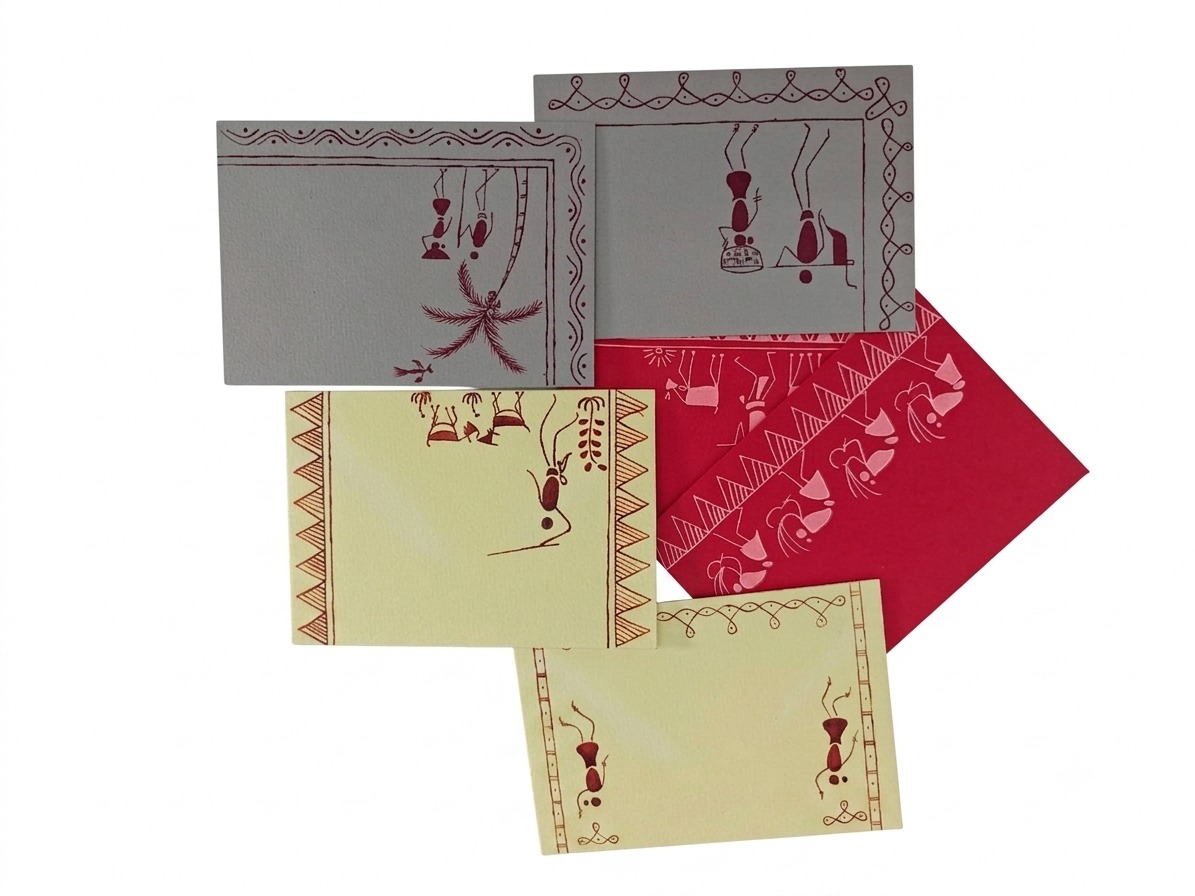
The work on this page is the result: the same Ikons, the same earth palette, carried onto objects a buyer in a city can live with. Made in Seethampeta, in Parvathipuram Manyam district, through the Seethampeta Savara Tribal Artisan Producer Company.